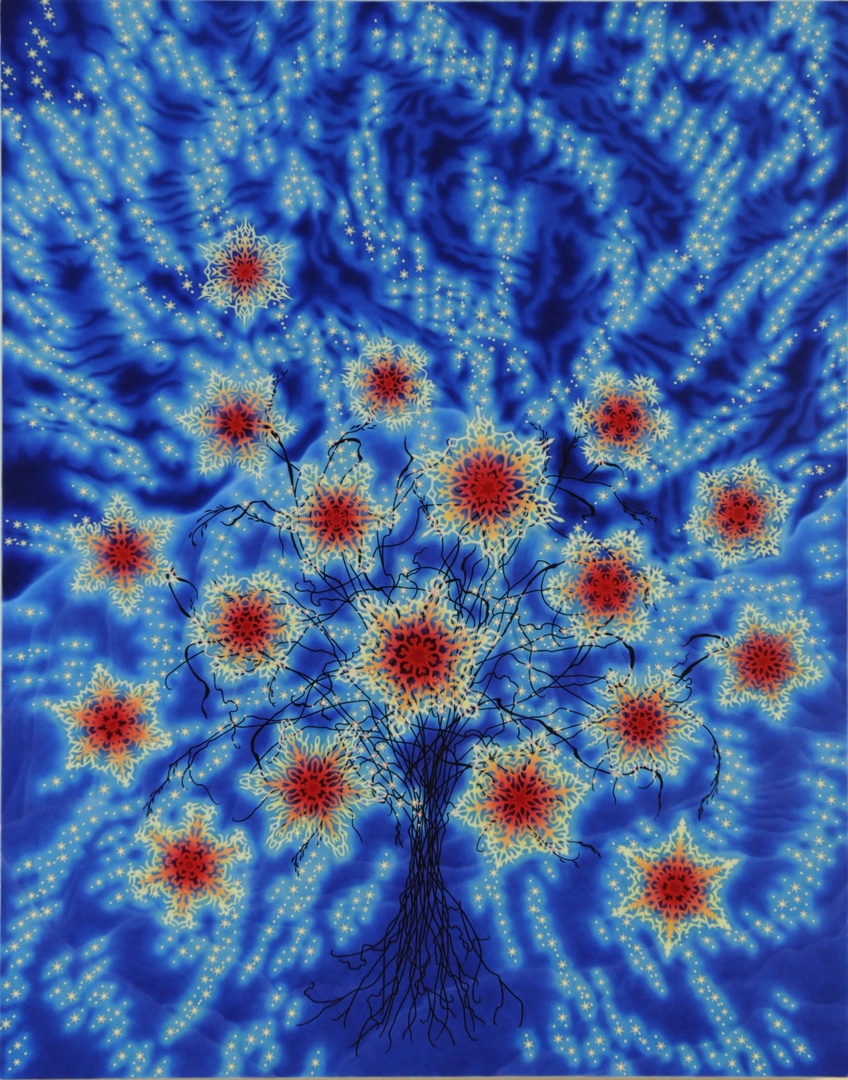
Showing posts with label devon. Show all posts

Sunday, December 11, 2016

Pins

Here's a fun thing I made when I took out the pins. There are 62 frames total.


Sunday, December 4, 2016

Leftovers

Our show was a success! I had the pleasure of talking to many people about my work, and everyone who stopped by had nothing but great things to say about our show.

It was a unique learning experience to put together this show for a gallery, and I'm glad I had this opportunity. There are some things I will keep in mind for next time, and I've learned some tips on what works and other factors to consider when putting together an exhibition.

Moving on, I'm organizing my thoughts and gathering what I've done in seminar so I can create my process book.


(Charlie Morse, Ryan Kumicz, Tori Cossette, Devon Unwin, LiAnn Natter, Ricky Molander)

Tuesday, November 29, 2016

Here are some pictures of my installation, as well as a few selected details taken from various points during the day.


Here's an added picture of the 3D printing process.

Tuesday, November 22, 2016

fibonacci mandala

a detail of Devon's "mandala," Tuesday 9:00am, 301 Cabot Gallery.

from the Leftovers thesis exhibition
Ricky Molander, Charlie Morse, Devon Unwin, Tori Cossette, LiAnn Natter and Ryan Kumicz

28 November – 2 December 2016
 

Wednesday, November 9, 2016

Update

My exhibition group and I have been busy getting everything squared away for our show. We're on the right track and we set up on 11/18. That being said, I had started to create pieces based on the fibonacci series, more specifically making a series on fibonacci packing found in plants, and I started to make it by hand where my mistakes became clearly visible. I liked this unpredictable outcome so I replicated it digitally found below.


In addition to this, I revisited my plans for how I want to set up my work in the show. I took my previous 2D pieces and created the challenge to arrange them with each other so they could make a larger 3D fractal without falling apart. Here is what I came up with.


The first 6 puzzle pieces are like the building blocks. Then, incorporating some of those principals came the next set. 


I plan to have each set of six with the larger rendered image. From here I want to see if I can make at least one more with the remaining pieces, and it will be even larger. I want to set it up this way because visually I think it's easier to see how the 2D pieces compliment the larger image.

Wednesday, October 26, 2016

Wall Plan

My senior show is on 11/30, and installation begins 11/18. This is what I'm thinking I'd like my space to look like. I've drawn out my plan to scale (1 inch = 1 foot), and certain area lengths can be altered.
Section 1 is the poster I included in my previous entry. The length and width can be adjusted, and it is currently 8 feet tall to mimic the movable walls that will be inside the gallery space. I'm not sure if it should be one continuous piece, or tiled. However, I'm leaning toward tiled to fit into the grid I've created.

Section 2 is a smaller, altered version of the 2D wall project based on a menger sponge, and rearranged based on type.

Section 3 is a chart that shows iterations of fractals in nature. The vertical shelves hold a fern, crystal, and shell. The horizontal shelves show the 1st, 2nd, and 3rd iteration of a menger sponge. The images inside the grid show iterations of my interpretation of each natural object.

Section 4 is a paper sculpture based on a Mosely snowflake (possibly on a pedestal). I'm not sure if this is necessary to include, but I would like to.

Sunday, October 16, 2016

Print


I really liked how my piece turned out for the recent 2D wall display, and I want to have a large element like that in my show. If I were to print out a poster or banner I would want to use this image (cropped). Currently this is about 8 feet long, and this is the maximum size I can generate through my laptop. Granted if this is a part of a larger component, I'd still like to incorporate my 2D design perhaps by making them smaller and creating more.

Friday, October 14, 2016

flat x II-d: Devon

Thoughts and process behind my wall project.

When the idea was proposed that we would be working with a visual grid on the wall I knew I wanted to incorporate it into my work. I've presented my work in 17 ten inch squares, and the arrangement was inspired by an interpretation of a menger sponge implying that the wall space itself becomes a part of the fractal with the grid in place. Each square shows an important detail from a different 2D fractal surface, and it is notable that they are placed near fractals that follow a similar outputted pattern or algorithm. I liked the idea of working on a larger scale than I normally would which engages the viewer whether it's from afar or up close.

A few pictures during installation:


Wednesday, September 28, 2016

Checking In

Here's an update on what's been going on. I've been trying to figure out how to visually show others how to create simple types of fractals. At first I tried breaking it down through equation, but it was brought to my attention to try and display it as a geometric figure. This is still proving difficult for some fractal types like the Mandelbrot set. However, I feel like I'm on the right track. In the end I could also choose one type of fractal to focus on if I feel that course of action is necessary.

Jumping back to 3D design, I've been working on an animation of the journey through a fractal. I'd like people to be able to hold the physical fractal in their hands, but also be able to look and see what it's like if you were to venture inside of it. I like the idea of how this 3D printed object will be small, but in fractal theory it continues on forever containing an endless space inside of it. The biggest challenge I'm facing right now with this test animation is creating a complex enough fractal, and the strain it puts on my laptop. In my recent animation attempt I ended up here. It looks as if it's falling apart, so I need to revisit my formulas.


Lastly, I've been thinking about how to condense my thesis into a 140 character statement for @designologue. Currently I'm thinking along the lines of, "I'm creating digital and physical media that others can interact with to show the chaotic yet structured basis of 2D and 3D fractal design."

Sunday, September 18, 2016

Sierpinski Triangle

Branching off from the 3D printing, I've been organizing my thoughts and trying to come up with ways of presenting mathematical information in a way that is understandable. For this, I used the Sierpinski triangle and sort of color coded it to show how to determine the number of triangles you are left with. In this picture, "r" represents the iteration you are on, and "n" is the number of triangles.


While I was creating my variation of the triangle, I thought about what would happen if I combined Pascal's triangle with permutation (Sierpinski's triangle can be created through Pascal's triangle). So with this in mind, I plan to create another triangle based on this theory.

Tuesday, September 13, 2016

Test Run

Over the past few days I've watched many tutorials on 2D and 3D modeling. While experimenting and learning software, I saved the following images.


This image is a bit larger to show detail.


Sunday, September 11, 2016

Picking Up Where I Left Off

Over the summer I went to MASS MoCA and had the opportunity to look at pieces by Sharon Ellis (pictured below). I was captivated by the vibrant colors and I really appreciate how these are hand painted because up until this point all of my work has been designed digitally. This, along with crystalline sculptures by Leah Piepgras, are just an idea of what I've been looking at.


Last semester I grew my own crystals and a question was brought to my attention as to whether they were considered a part of nature or not because I had grown them myself (they didn't occur naturally). I've decided to take this a step further and alter these structures I've created through 3D modeling software. I want to recreate and hopefully print them, showing a defined transformation in their form and composition from "natural" to "designed". I've started this process by examining various modeling software, and I've been given the opportunity to attend a 3D printing workshop later this week.